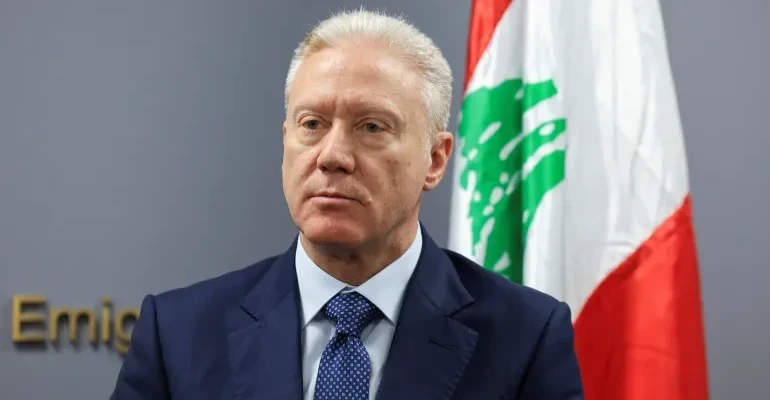
The United States Embassy in Lebanon issued a statement from Awkar, a municipality in the Matn District of the Mount Lebanon Governorate, a location often associated with significant diplomatic pronouncements. The statement, released 24 hours after remarks by Hezbollah Secretary-General Sheikh Naim Qassem, was explicitly directed against Hezbollah, asserting that Washington will not accept an independent consensual formula with the group. This firm stance from the US Embassy showed a clear and unambiguous position regarding the future political role of Hezbollah within Lebanon.
The embassy's statement emphasized that if Hezbollah intends to transition from a military to a political role, its path must unequivocally be through the state. This condition notes a fundamental demand from Washington for Hezbollah to integrate fully into the established Lebanese governmental framework, foregoing any parallel or independent power structures. The statement decisively informed Iran that the decision to separate Lebanon from its influence is final, drawing a stark line in the sand regarding regional geopolitical alignments. The embassy also noted that Hezbollah receives its orders from Iran, showing the perceived foreign influence on the group and framing the issue within a broader regional power dynamic. The US position, articulated with such clarity, delineated a precise boundary regarding any potential negotiations or political integration involving Hezbollah that operates outside state frameworks. This declaration reinforced the US commitment to bolstering the authority of the Lebanese state as the sole legitimate arbiter of power and security within the country.
Hezbollah's Stance and US Response
Hezbollah Secretary-General Sheikh Naim Qassem reiterated his rejection of tripartite negotiations and the 'framework' formula, indicating a firm position against certain diplomatic approaches. Sheikh Naim Qassem also affirmed Hezbollah's unwavering adherence to the November 27, 2024 agreement and maintained a stance against US mediation, suggesting a preference for other channels or a direct approach to resolving regional issues. This position from the Hezbollah leadership outlined specific parameters for engagement, signaling a cautious and selective approach to international dialogue.
In contrast to Sheikh Naim Qassem's public statements, Mahmoud Qamati, Deputy Head of Hezbollah's Political Council, spoke of an 'open door for negotiation', suggesting a degree of flexibility within the group's leadership regarding potential diplomatic engagement. Mr. Qamati's remarks offered a different perspective, indicating that negotiations with Americans were not considered closed in principle. He further suggested that the US Ambassador had offered to meet with Hezbollah leadership, an assertion that, if true, would represent a significant overture. This perceived offer from the US Ambassador noted the complex and often contradictory signals emanating from both sides.
Mr. Qamati clarified that the appropriate path for communication, particularly concerning the US, was through the Islamabad agreement channel, which he explicitly linked to broader US-Iran negotiations. This clarification suggested a preference for a more established and indirect diplomatic conduit, potentially leveraging existing communication lines between Washington and Tehran. Earlier, US envoy Tom Barrack had proposed communication with Hezbollah, an initiative that signaled an initial willingness from the US side to engage. US Ambassador to Lebanon Michel Elia later formalized the invitation for communication, further solidifying the diplomatic overture. These actions from US officials indicated a strategic effort to establish a dialogue, despite the public rhetoric. However, US diplomatic circles subsequently confirmed that Washington's primary goal in any engagement is to end Hezbollah's military role, clarifying the fundamental objective behind any potential talks and setting a clear expectation for the outcome of such negotiations. This objective showed the deep-seated security concerns driving US policy in the region and its desire to see a demilitarized political landscape in Lebanon.
Iran's Influence and Diplomatic Maneuvers
A prominent Gulf figure, known for close ties to the Trump administration, sent a written paper containing several points to Hezbollah leadership. This message from the Gulf figure was conveyed through a Lebanese security official, indicating a discreet and high-level back channel for communication within the complex regional political landscape. This communication occurred amidst ongoing regional dynamics involving Iran and its allies, further illustrating the multi-faceted nature of diplomatic engagement in the Middle East. The involvement of a Gulf figure with such connections suggests a broader, perhaps unofficial, effort to influence or mediate in the Lebanese political arena, reflecting the interconnectedness of regional security and political stability.
Iranian Parliament Speaker Mohammad Bagher Ghalibaf explicitly stated Iran's influence over the group, asserting, "We have influence over Hezbollah and its decisions." This declaration from a high-ranking Iranian official unequivocally shows Tehran's perceived and openly acknowledged role in Hezbollah's strategic direction and decision-making processes. Such a statement from a senior official provides direct evidence of the hierarchical relationship between Iran and Hezbollah, confirming the long-held suspicions of many international observers. The broader situation has been characterized by some observers as "negotiating the negotiation," a phrase that captures the intricate and often protracted process of establishing the terms and conditions for dialogue before substantive talks can even begin. This complex diplomatic dance is taking place under significant Israeli military pressure and financial sanctions targeting various entities in the region, adding layers of urgency and constraint to any potential breakthroughs.
Iran had previously communicated to Washington through existing negotiation channels that it does not "trust" the current Lebanese authority structure. This indicated Tehran's deep reservations about the existing governance framework in Lebanon and its potential impact on regional stability, suggesting a desire for a different political arrangement. This lack of trust from Iran's perspective further complicated any efforts towards a unified approach to Lebanese governance. However, the White House subsequently rejected Iran's suggestion for a different Lebanese authority structure, firmly upholding the existing political framework in Lebanon. The US refusal notes a fundamental divergence in perspectives between Washington and Tehran regarding the preferred political arrangement in Lebanon, signaling a significant point of contention that continues to shape regional dynamics. This rejection by the White House reinforced the US commitment to the current Lebanese state, despite its challenges.
State Control and Military Aid
The US Embassy statement urged the Lebanese state to actively manage the file concerning Hezbollah and to prevent the existence of parallel official and de facto tracks. This call for consolidated state authority is a central tenet of US policy aimed at strengthening legitimate governmental institutions in Lebanon. The embassy's emphasis on singular state control reflects a desire to eliminate any ambiguities regarding who holds ultimate authority on security and political matters within the country.
Reports indicate that US military aid, which was reportedly ready before the Lebanese President's visit to Washington, has not been released. This delay in aid disbursement suggests a conditional approach to US support, potentially linking the release of funds to specific actions or reforms by the Lebanese government. A $35 million aid package has had its spending locations determined, indicating specific allocations for support, yet its actual delivery remains pending. This situation shows the strategic leverage the US holds through its military assistance programs, using them as a tool to encourage desired political and security outcomes.
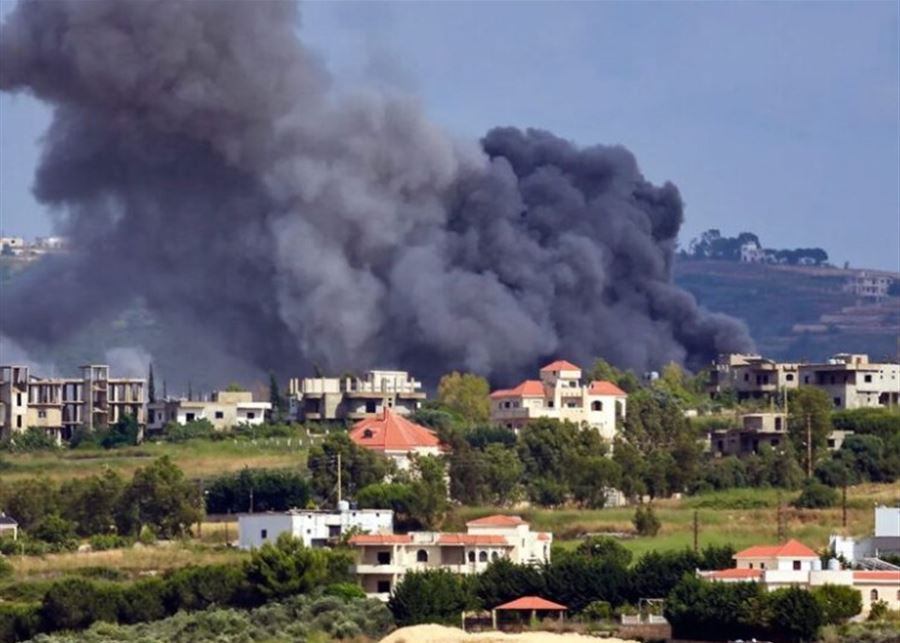
In recent developments, Israel renewed its media campaign against the Lebanese Army, a move that often precedes or accompanies military tensions. Israel also sent coordinates in Nabatieh and photos of raids to the Lebanese Army via the US channel, indicating a direct, albeit indirect, communication line for security-related intelligence. This exchange notes the role of the US as an intermediary in sensitive security matters between Lebanon and Israel. However, the Lebanese Army command refused to comply with these requests without firm guarantees that Israel would not advance on those sites, demonstrating a cautious and protective stance towards its sovereign territory and personnel. This refusal shows the Lebanese Army's commitment to its operational independence and its responsibility to protect national interests. The US Embassy's push for state control aligns with Washington's broader strategy to consolidate authority within official Lebanese institutions, viewing a strong and unified state as key for regional stability. The unreleased military aid suggests a conditional approach to supporting the Lebanese forces, potentially linked to the state's assertiveness over security matters and its ability to effectively manage all security challenges within its borders. The communication regarding Israeli operations, channeled through the US, notes the complex diplomatic and security coordination efforts in the region, often involving multiple layers of communication and negotiation to prevent escalation.
UNIFIL and Future Uncertainty
The potential non-renewal of the United Nations Interim Force in Lebanon (UNIFIL) has emerged as a significant point of contention, raising serious concerns about the future of peacekeeping operations in the volatile region. Reports indicate a refusal to extend the mandate for these peacekeeping forces, which have been operating in southern Lebanon for decades, playing a critical role in maintaining stability along the Blue Line. This refusal to renew the mandate signals a potential shift in international commitment or a stalemate among member states regarding the force's continued presence.
This situation is further compounded by a profound lack of consensus regarding an alternative force to assume UNIFIL's responsibilities, should its mandate indeed lapse. Discussions among relevant parties have not yielded an agreement on the composition or operational parameters of such a force, leaving a significant void in the planning for future security arrangements. The absence of a clear replacement plan creates considerable apprehension about the potential for increased instability in a region already prone to conflict. Additionally, there remains no clear understanding or commitment on the specific missions this alternative force would undertake, nor has a funding mechanism been established to support its operations. These critical gaps in planning – concerning composition, mission, and funding – point to considerable uncertainty regarding future security arrangements in the region currently monitored by UNIFIL. The potential withdrawal or non-renewal of UNIFIL, without a viable and agreed-upon alternative, could have broad implications for regional security, potentially exacerbating existing tensions and creating new challenges for Lebanon and its neighbors. The international community faces a pressing challenge to address these issues to prevent a security vacuum.